
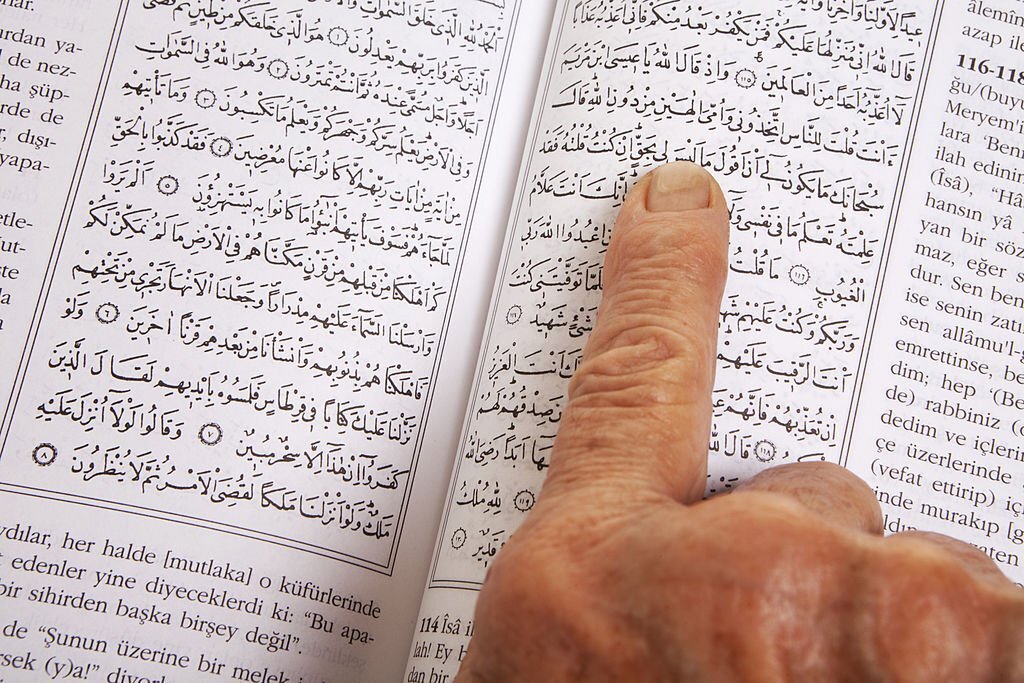
Essential Tajweed Rules Every Quran Reader Must Know
Quran Reading with Tajweed is important because it is a set of rules that are applied to pronounce the verses of the Qur’an correctly and accurately. Therefore, Tajweed means improvement and mastery. It is a set of guidelines that help to read correctly without any mistakes. Through the distinguished electronic course, you can learn Tajweed from scratch and learn the basics until you reach the stage of mastery.
Essential Tajweed rules for beginners
What are the essential Tajweed rules for Quran? We offer Essential Tajweed for daily reading courses, and now you can learn Tajweed rules for proper Quran. What is the importance of core Tajweed, it is important to recite the Quran Reading with Tajweed, observing its rules.
The Prophet peace be upon him said (Whoever recites the Quran and memorizes it Allah will place him with the noble and obedient scribes and if he recites it with difficulty he will have double the reward)
قالَ رسولُ اللَّهِ ﷺ: الَّذِي يَقْرَأُ القُرْآنَ وَهُو ماهِرٌ بِهِ معَ السَّفَرةِ الكِرَامِ البَرَرَةِ، وَالَّذِي يقرَأُ القُرْآنَ ويَتَتَعْتَعُ فِيهِ وَهُو عليهِ شَاقٌّ لَهُ أَجْران)
This hadith emphasizes the importance of correct pronunciation Learning the principles of Tajweed ensures accurate recitation correct pronunciation and the correct articulation of each letter thus preserving both the recitation and its meaning and among the rules of Tajweed are the rules of prolongation madd the correct pronunciation of the silent nun and tanween and the correct places to pause during recitation.


Tajweed essentials every reader needs
How to learn basic Tajweed rules at home, we offer Quran Reading with Tajweed course and
Beginner guide to Tajweed rules so you will learn the Makharij al-huruf articulation which means that your accent is a letter with a point of articulation when pronouncing it, and that is what distinguishes each letter from the others in the Arabic language, in the case of the letter being silent or moving. Understanding the articulation points of the letters is one of the important things for correct recitation, and there are five articulation points, which are the Jawf The oral cavity, the throat, tongue, the lips, and the nasal cavity.
Why every Quran reader needs Tajweed rules, we offer Core Tajweed techniques and the Sifaat letter characteristics means the characteristics through which Arabic letters are pronounced, including necessary characteristics and incidental characteristics. A necessary characteristic is a characteristic that is one of the rights of the letter and cannot be dispensed with, while an incidental characteristic is one that is added to the letter and when it is removed it does not affect the letter.

Basic Tajweed for Quran reading
Through our Quran Reading with Tajweed course you can learn Tajweed rules for accurate recitation, Tajweed fundamentals overview, Essential rules for Quran Tajweed, and Tajweed rules for home study, you can learn Tajweed through a Quran Reading with Tajweed course, in addition to listening and practicing until you achieve perfect recitation. You will learn Quran Reading with Tajweed rules that help in correct recitation, such as:
- Ghunnah nasalization, which is the nasal sound produced when pronouncing certain letters. This occurs when the nose is closed without breathing, and the nasal sound is found in the letters م and ن.
- Another important rule is the silent ن and tanween. The silent ن refers to the letter ن, while tanween is a diacritical mark added to the end of words and indicates indefinite nouns.
- Applying the Noon sakinah rules and tanween leads to correct pronunciation and accuracy in recitation because it preserves the integrity of word endings, such as Tanween pronunciation in the word بيتٌ (home).

Key rules of Tajweed in Quran
How do I apply essential Tajweed in reading? Learning Tajweed requires practice, and learning the rules of Noon Sakinah and Tanween is extremely important. These rules include several fundamental stages, such as:
Izhar clear pronunciation involves pronouncing the Noon without nasalization when it follows the letters [ء ه ع ح غ خ].
- Idgham assimilation is one of the rules of Tajweed, and it has two types: Idghama bi ghunnah, which is used when the letters ي ن م و follow the Noon Sakinah or Tanween, and Idgham without nasalization, which occurs when the letters ر follow the Noon Sakinah or Tanween.
- Iqlab transformation means changing the nasalization to a Meem when the letter ب follows the Noon Sakinah or Tanween, and the letter ب is pronounced.
- Ikhfaa (concealment): This occurs with Ikhfa hidden letters, that is, letters other than those mentioned above, where the Noon Sakinah and Tanween are not pronounced, but rather nasalization is applied.
- Another rule of Tajweed is the Noon and Meem with Shaddah (doubled consonant).
- During the Quran Reading with Tajweed course you will learn Quran Reading with Tajweed and how to perform Ikhfaa Shafawi (oral concealment), Idgham Shafawi (oral assimilation), Qalqalah echo sounds, and Madd elongation rules in Tajweed.

How does Tajweed improve Quran reading
What are fundamental rules of Tajweed, we offer Top Tajweed rules for beginners to know, and Step-by-step essential Tajweed explained, also regarding the Qira’at recitation styles, there are seven. When learning Tajweed, individuals are also interested in learning about these readings، The reading of Nafi’, which originated in Medina and is one of the most widespread methods, characterized by its smooth style of recitation, and the reading of Ibn Kathir, which originated in Mecca and is distinguished by its precise application of vowel sounds and pronunciation.
The reading of Abu ‘Amr, which originated in Basra, and the reading of Ibn ‘Amir, which originated in Damascus. The reading of ‘Asim, which is one of the most widespread readings today. The reading of Hamza, which originated in Kufa and is characterized by its clear and distinct pauses. Finally, Qira’at Al-Kisai, also from Kufa, is distinguished by its unique and distinctive recitation and pronunciation.
In conclusion, Why master Tajweed rules for recitation, because Must-learn Tajweed for Muslims and during this course you will learn the strategy of the Huroof muqatta’at letters, Simple ways to remember Tajweed rules,Quran Reading with Tajweed, Easy guide to essential Quran Tajweed, Explain the must-know Tajweed principles, and Basic Tajweed rules every Muslim should learn, with us you will reach an advanced stage in learning the rules of Tajweed.
REGISTER NOW